Does Spring have you sneezing? – Ayurvedic home remedies for relief
What's actually happening in your body — and simple, practical ways you can support it.
The sneezing starts. Your eyes get itchy. Your nose won't stop running and you can't quite tell if it's a cold or seasonal allergies. Sound familiar?
Before you reach for the antihistamines or over the counter meds, here's a different way to think about what's going on — and some gentle, time-tested things you can do at home.
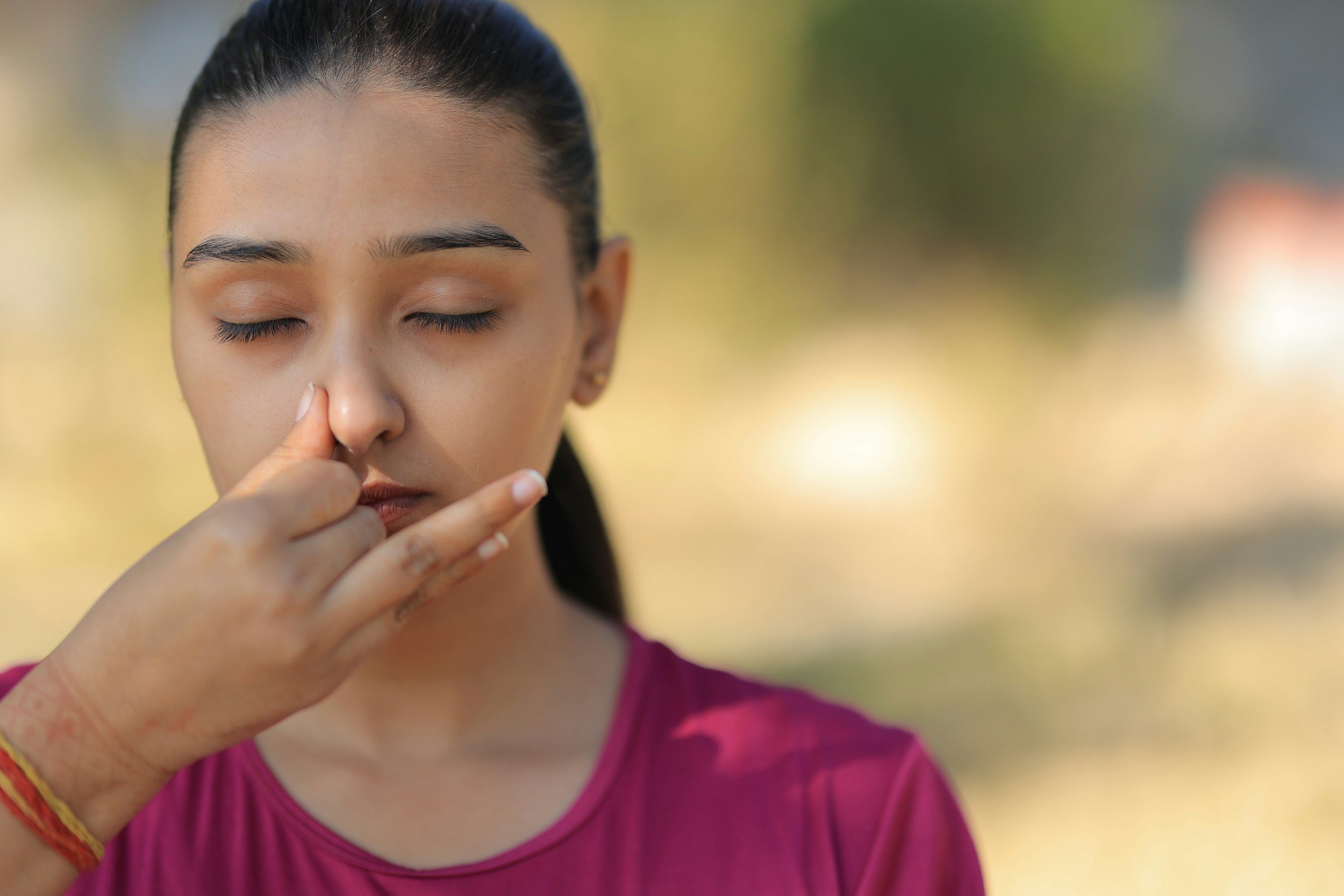
Nadi Shodhana (alternate nostril breathing) done for just 5 minutes each morning helps keep the nasal passages clear,
Why does this happen? The Ayurvedic explanation
Ayurveda sees spring as Kapha season. Kapha is the energy of heaviness, moisture, and slowness — and during winter, we naturally accumulate more of it. We eat heavier foods, move less, spend more time indoors (with heating). That's heavy on the body.
Then spring arrives. The weather warms up, things start to thaw and bloom — and your body tries to do the same. It begins clearing out the heaviness it's been holding. That runny nose, that congestion, those sneezes? In Ayurveda, that's your body doing exactly what it should — releasing accumulated waste.
The problem is that most of us have accumulated quite a lot over winter. Add pollen and environmental triggers on top of a system already trying to clear itself, and the reaction becomes more intense than we would like.
Ayurveda calls this accumulated waste ‘ama’ — undigested residue that builds up when digestion is sluggish and we haven't been eating or resting well. High ama weakens immunity, makes the body more reactive, and turns what should be a gentle seasonal clearing into full-blown allergy season or even sickness.
““Your allergy season doesn’t start in April. It starts earlier in February — with how you ate, slept, and moved through winter.””

Lightening the load on the body can help regulate the system. Warm liquids can help with the process.
BEFORE FALLING SICK — Building resilience
The best time to start is before symptoms arrive. These habits reduce the load on your body so it doesn't have to work as hard when spring hits.
Pranayama — breathe through it, literally
Nadi Shodhana (alternate nostril breathing) done for just 5 minutes each morning helps keep the nasal passages clear, strengthens the respiratory system, and calms the nervous system. It costs nothing and takes less time than your morning scroll.
Nasya — a few drops of oil in your nose
This one surprises people. After your morning wash, apply 1–2 drops of plain sesame oil or brahmi oil to each nostril using your pinky finger or a dropper. It creates a gentle protective lining that filters allergens before they reach deeper tissues.
Lighten the load on your GUT
A heavy, sluggish gut produces more ‘ama’ or toxins — which makes the whole system more reactive. As spring arrives, gradually shift toward lighter, warmer, easier-to-digest foods. Think cooked vegetables, warm soups, lentils with spices.
Eat cleansing, anti-inflammatory foods
Some foods actively help the body clear ‘ama’ and reduce inflammation. Work these into your week: ginger (fresh or as tea), turmeric with a pinch of black pepper, warm lemon water in the morning, coriander, cumin, fennel, and dark leafy greens lightly cooked with spices.
“A simple morning ritual to try
Warm lemon water on waking → 5 minutes of alternate nostril breathing → nasya oil. That’s it. Ten minutes. It does more for allergy season than most supplements.”
WHAT TO DO WHEN YOU FALL SICK — let your body do its job
If the season catches up with you anyway, here's the Ayurvedic approach.
Drink warm water — all day
Not room temperature. Warm. Sipping warm water throughout the day flushes ama from the system, keeps passages moist, supports digestion, and gently moves congestion.
Steam and clear passages gently
A simple steam inhalation — bowl of hot water, towel over your head, 5–10 minutes — loosens congestion without any medication. Add a drop of eucalyptus oil or a pinch of ajwain (carom seeds) to the water.
Eat kitchari — give your gut a break
Kitchari is a simple, nourishing one-pot meal of split mung dal and basmati rice, cooked with ghee, cumin, coriander, turmeric, and ginger. Ayurveda considers it one of the most healing foods there is — easy to digest, deeply nourishing, and cleansing for the system.
Rest — this is not optional
Ayurveda is very direct on this: rest is medicine. When you're sick and you push through anyway, you drive the illness deeper into the body and extend recovery. Even one full day of genuine rest — early to bed, no screens, warm food, warmth — will cut your recovery time significantly.
Reduce stress as much as you can
Stress depletes Ojas — the Ayurvedic term for your vital energy and immune reserve. When Ojas is low, the body cannot fight effectively or recover quickly. This isn't abstract — we all know how a stressful week makes us more likely to get sick.
Trust your body — it knows what to do
This might be the most Ayurvedic piece of advice in this whole piece. The body has a strong, intelligent drive toward healing. Your role when you're sick is to remove obstacles — the bad food, the screen time, the late nights, the stress — and give it what it needs: warmth, rest, simple nourishment, and time.
“Kitchari — the simplest recipe
Equal parts split mung dal and white basmati rice. Warm ghee in a pot, add a teaspoon each of cumin seeds, coriander, and turmeric, a thumb of fresh ginger. Add the dal and rice, cover with 4–5 cups of water, cook until soft and porridge-like. Salt to taste. Eat warm. Make a big pot and eat it for two days.”
Lastly, be gentle with yourself.
Small, consistent acts of care — done with intention — are enough.
Your body knows how to heal. Just keep it simple.
Stay consistent and you will start seeing results in no time.
Note: If your symptoms are severe or you have a known allergy condition, please work with your doctor alongside these practices. Ayurveda is a beautiful complement to modern medicine.
Lifestyle • Seasonal wellness • Ayurveda
Want more practical Ayurvedic tips like this?
We write for real women navigating real life — no overwhelm, no perfection required.
Upcoming Programs & Retreats
Learn more >